
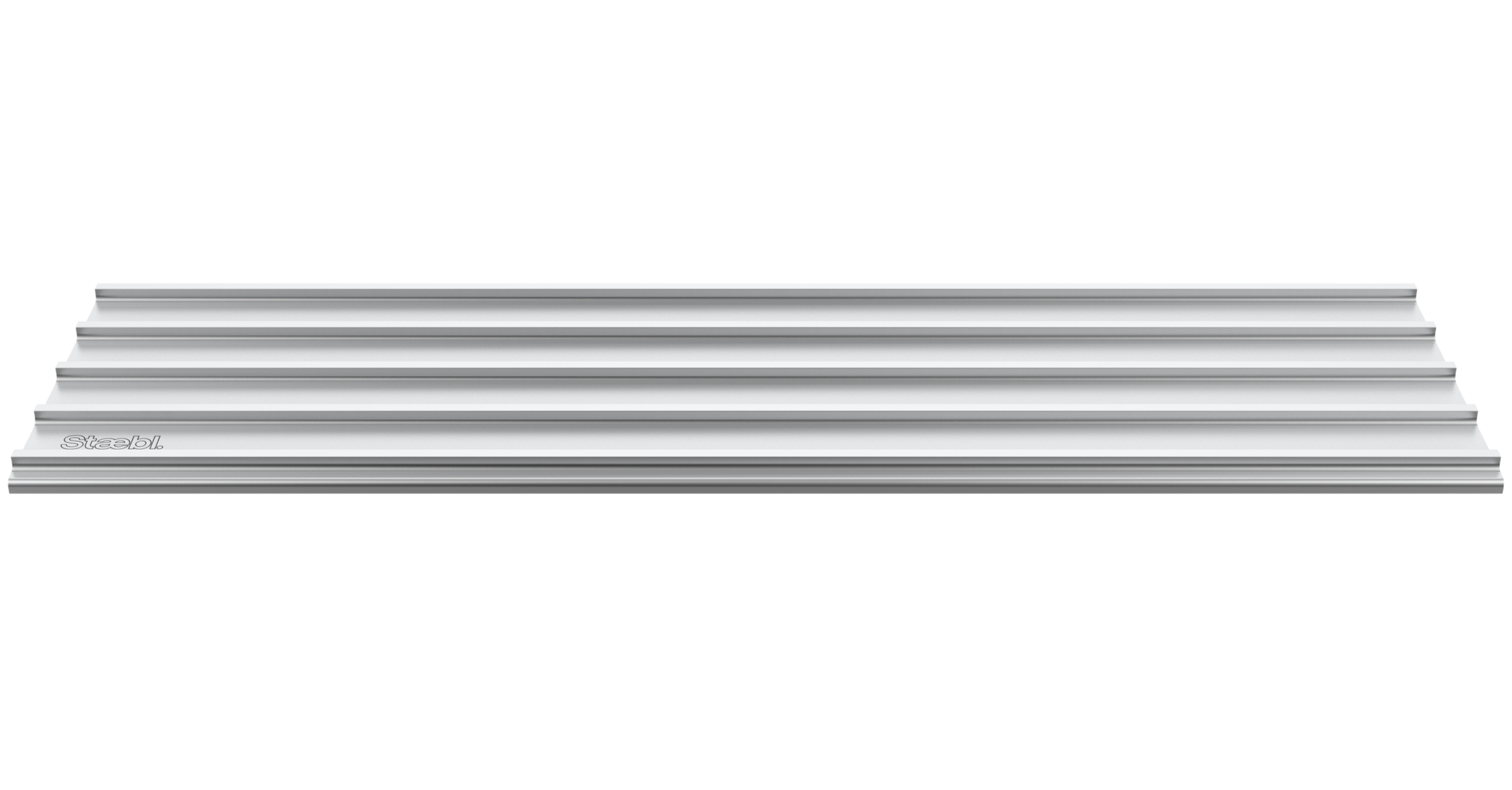
Knoll
Beautifully safe Stair Edging made from 100% recycled materials.
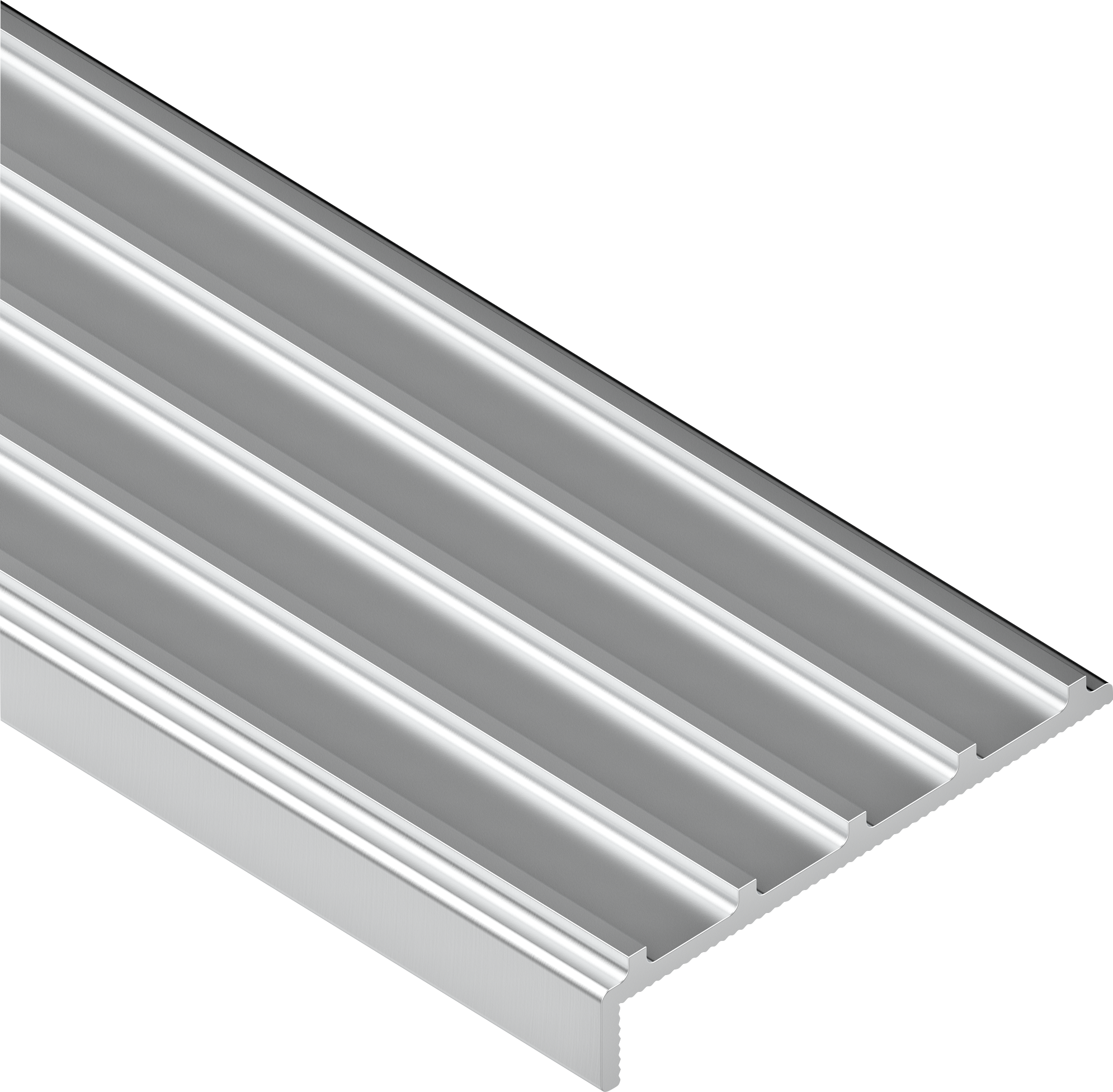
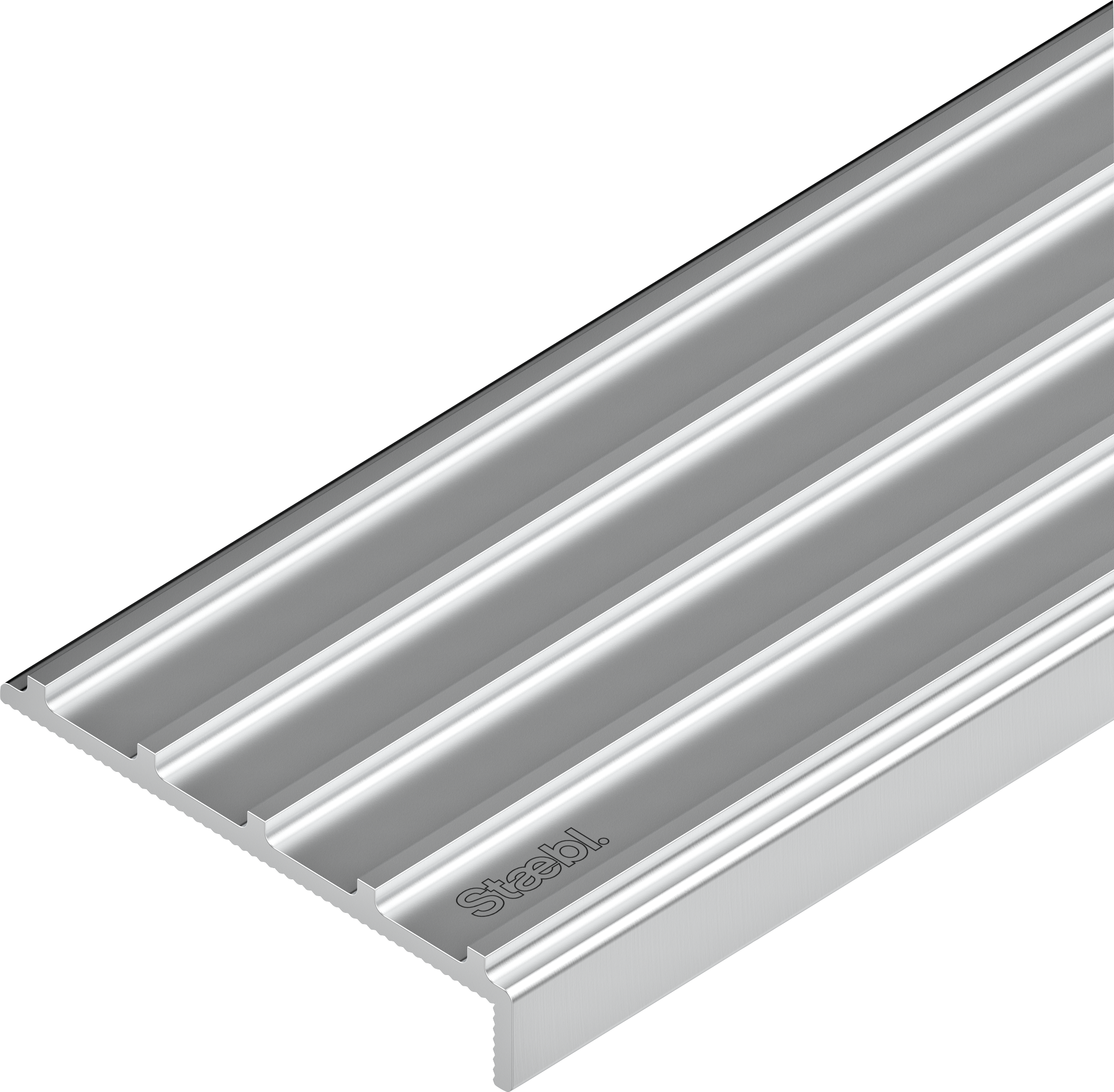
The Knoll Series by Staebl addresses climate change with three redefined edging and trim design applications presented quietly in modern architectural finishes. Fused with slip-prevention properties and balanced table-top mountain aesthetics, this edging series is durable as it is responsible.
Explore Knoll Edging
Remain mobile with specific Stair Edging and Trim models to demarcate dangers
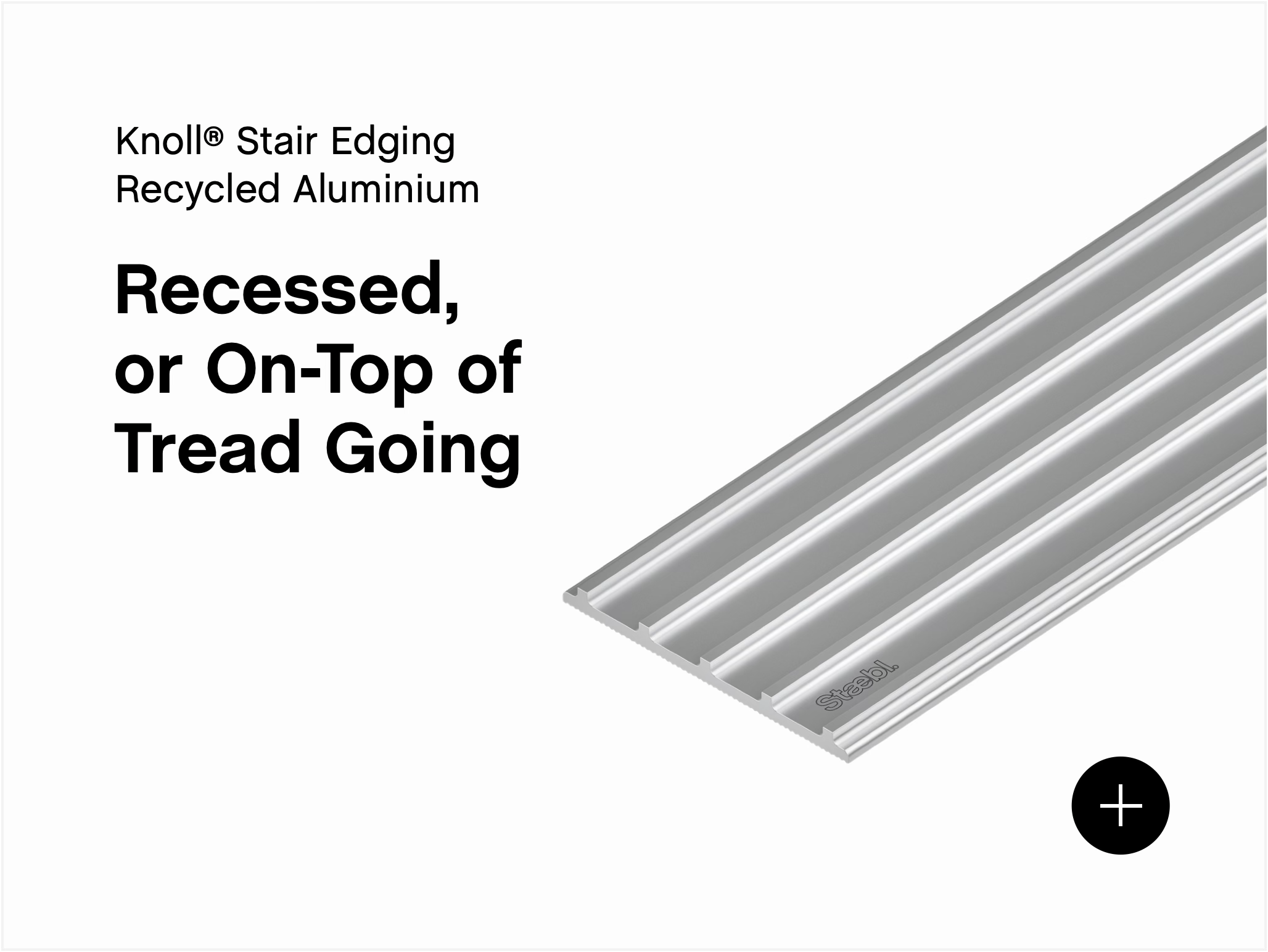

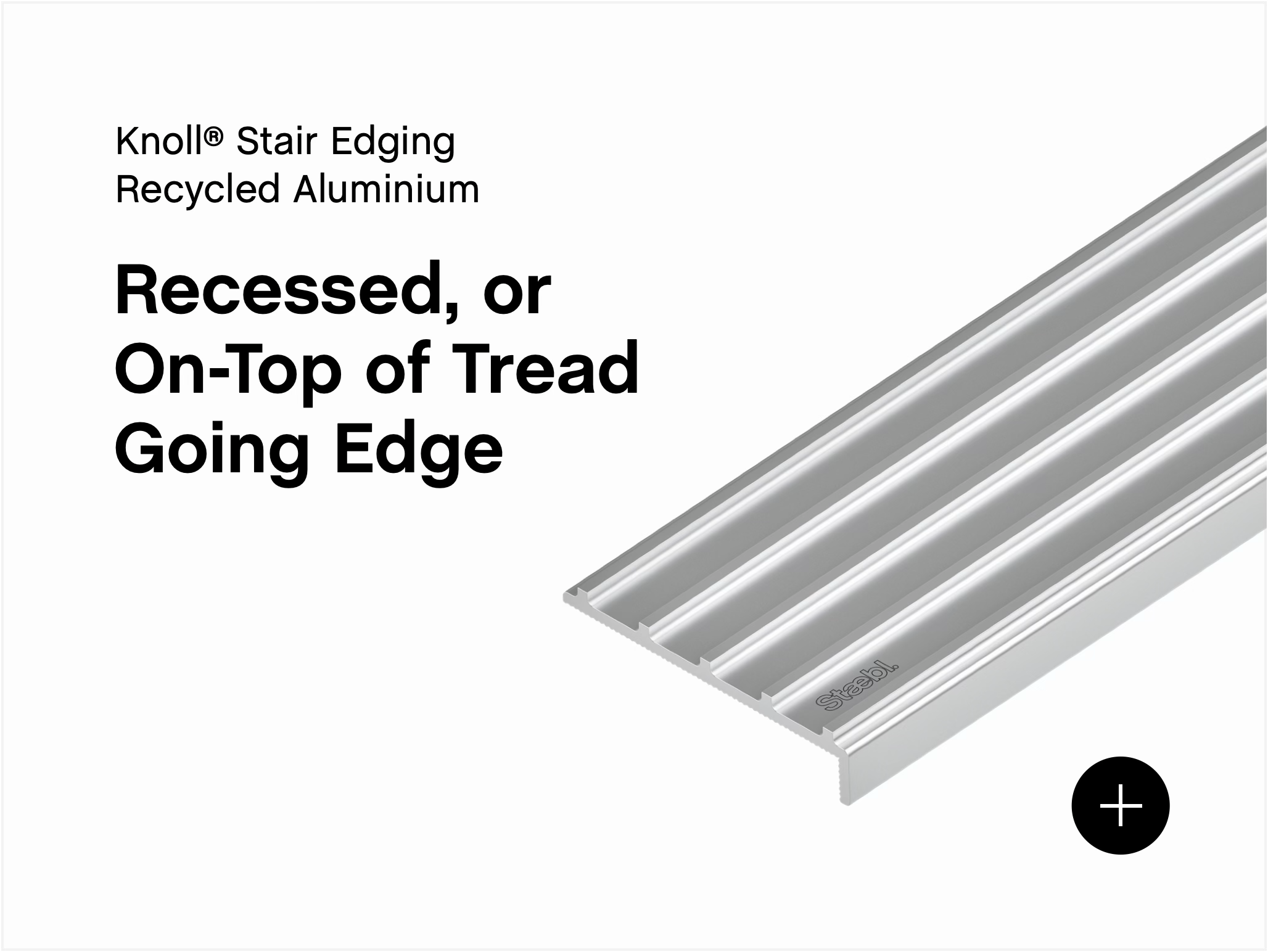

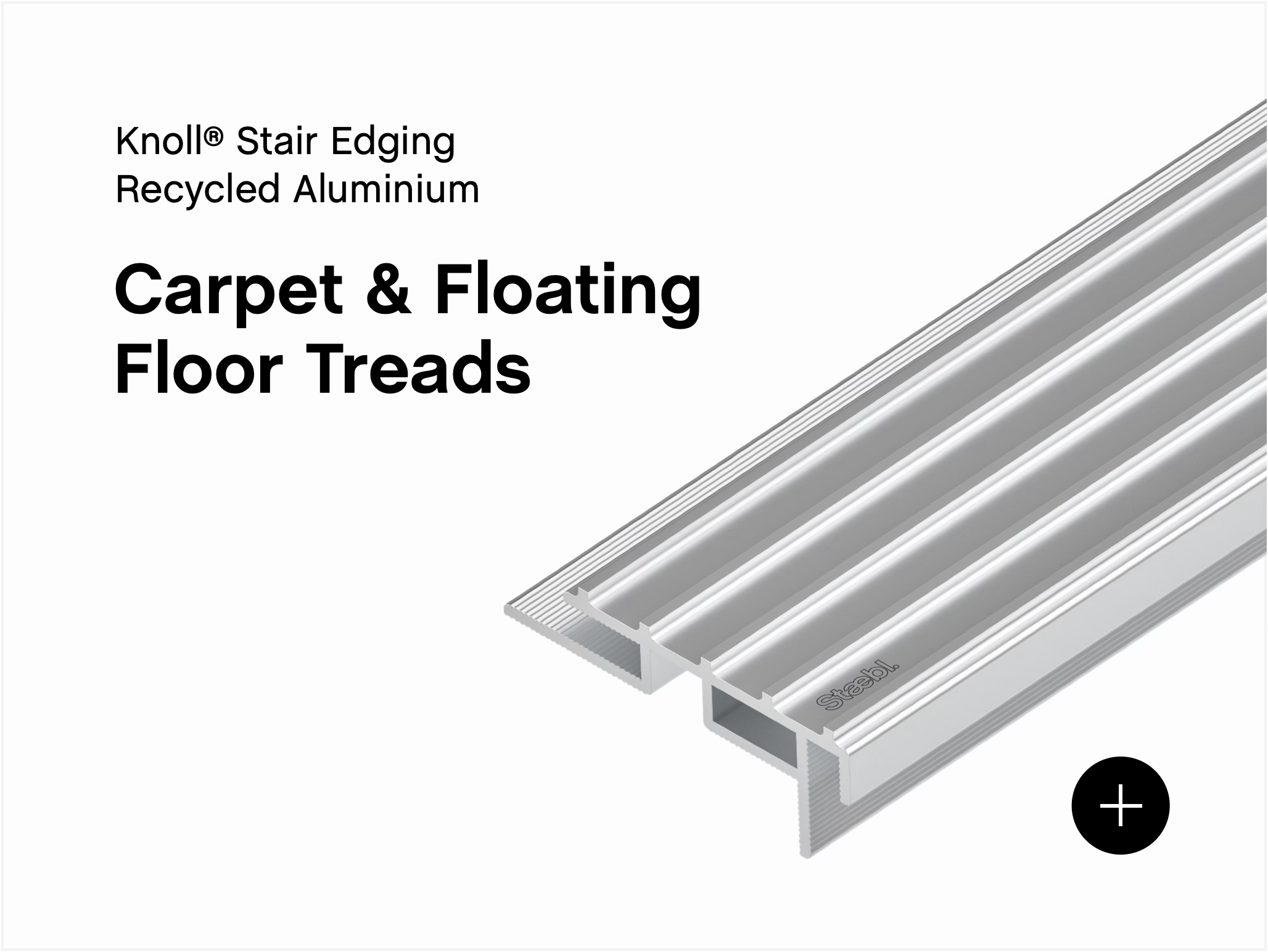

Remade-made from Verified 100% Aluminium Waste.
Waste Remade
Our Knoll Stair Edging Series is a direct response to the critical need for the construction industry to take urgent environmental action by adapting our business systems to reduce landfill waste and Carbon Emissions in Australasia.
By choosing a different path and deciding to lead this critical change, we have designed our products for End-of-Life recovery, recycling and reusability.
Specifically, Knoll Edging and Trims are part of Stæbl's Waste Remade & Design Loop Product Guarantee provided in Australia.
Read the Staebl 2035 Environmental Report

Waste Remade
Mobility & Independence with a permanence & consistency
Engineered for treads, steps, and edges, Stæbl Edging & Trims are made for high-foot-traffic areas like commercial premises and public spaces infrastructure projects.
Product performance testing from leading scientists and engineers provides for transparency in the conformance requirements of the National Construction Code, Australian Standards and the Access to Premises Regulations in Australia and New Zealand.

Section Profile of Knoll Plateau Edging Silver Day Stæbl Staebl Natural Dye Deep Anodising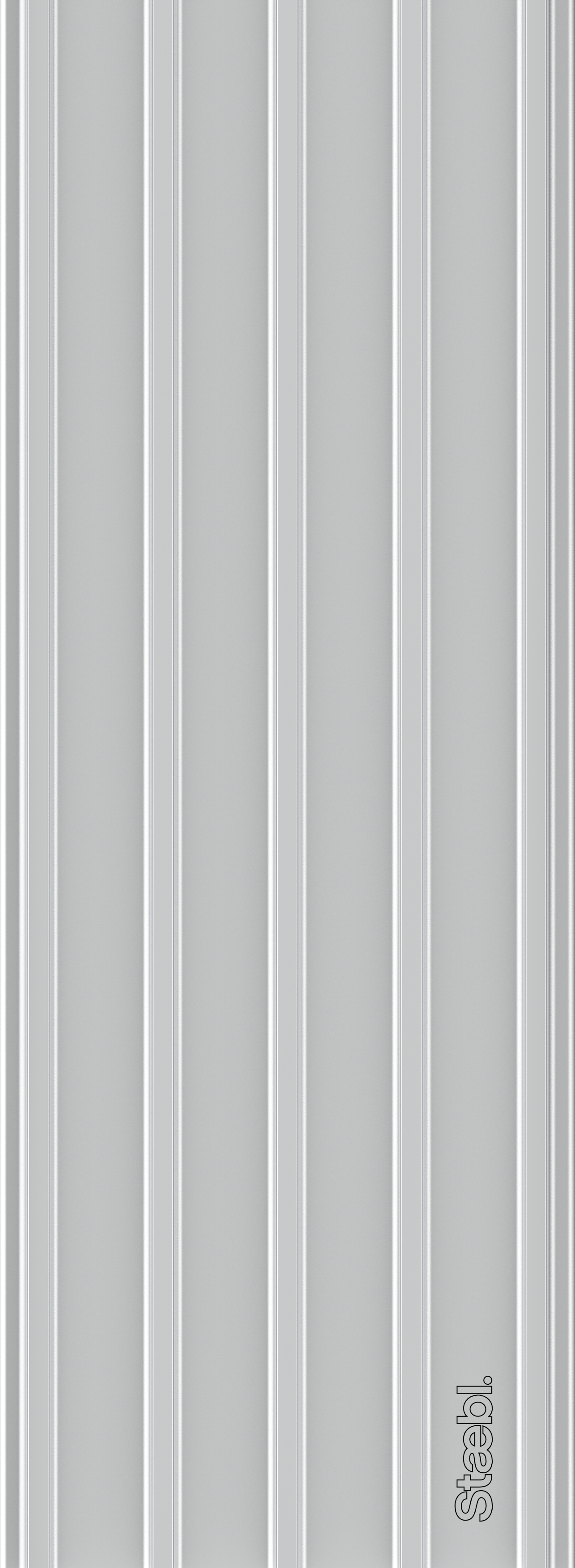
Topside of Knoll Plateau Edging Silver Day Stæbl Hard Coat AnodisingAlways visible with Knoll Dyed Colour-ways
Consistent LRV
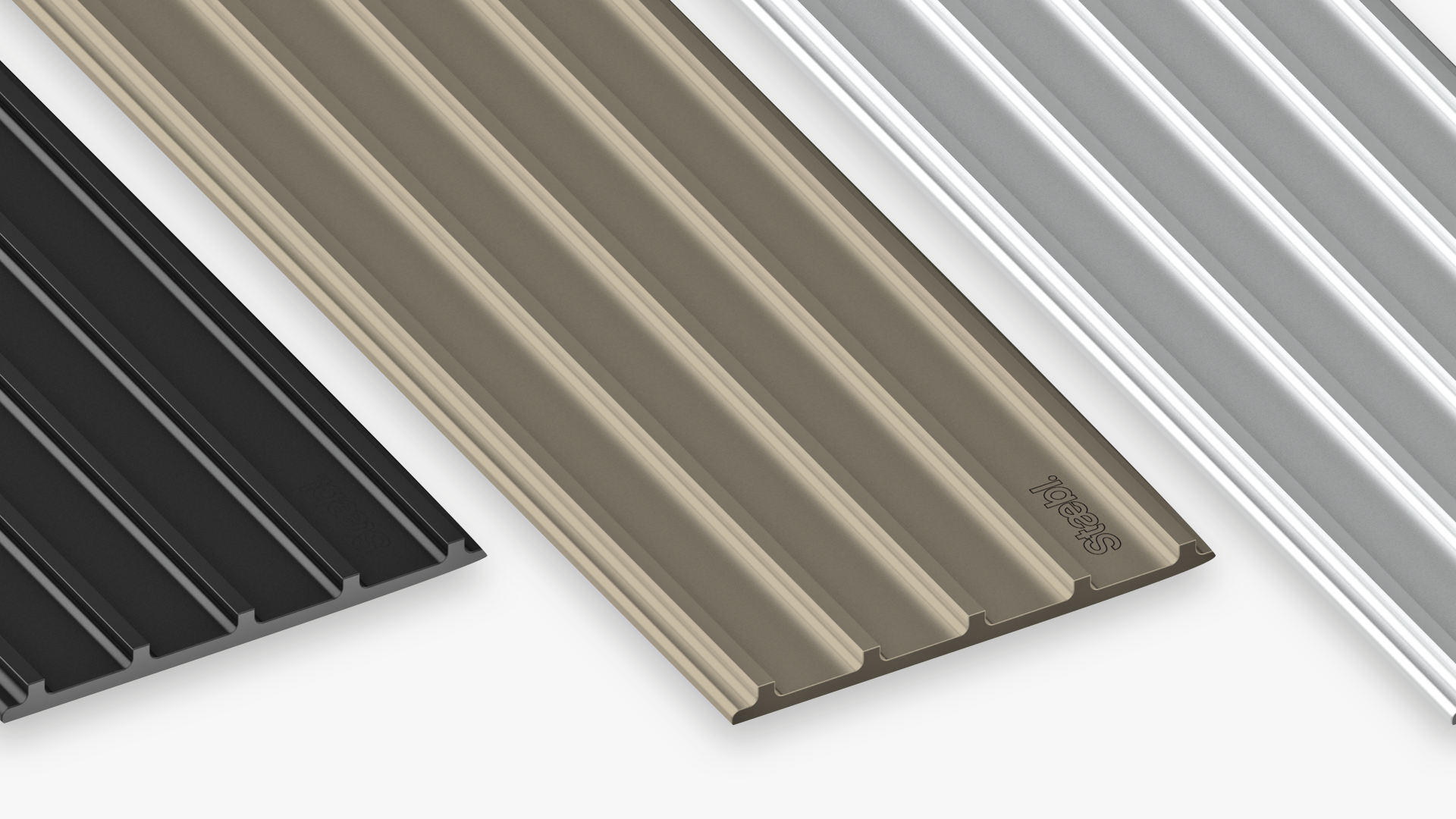
We immerse Knoll in coloured dyes, sealing them into our recycled aluminium alloy up to a depth of 60+ microns. Our process ensures enduring colour vibrancy and Luminance Contrast for its application life. Stæbl's coloured dyeing and sealing process delivers unmatched product performance, extended life expectancy and consistent demarcation of the trafficked stair edges and surfaces.
Friction when and where it's required.
Knoll's Plateau, Escarpment and Areté section profiles are engineered for pedestrian foot traffic in dry and wet conditions. Slip-prevention performance testing in commercial, scientific laboratories can also be verified on location once installed. Our operational commitment to act transparently invites your trust and so we remain accountable for the work that we do.


Slip Resistance Value (SRV) Requirements
Tested by accredited labs using Appendix A (Wet Pendulum Test).
Re-testable onsite per SA HB 198:2014. (6)
Compatible with Staebl Custodian® field compliance support.
Topside of Knoll Areté Edging Black Dusk Stæbl Hard Coat AnodisingMeet the Knoll line-up
Worth Standing On
Adapt the look of your external or interior requirements without functional compromise. Knoll's easily interchangeable profiles maintain your design feel and style and are available for various built environmental applications, colours and surface materials.
Plateau
Silver Day & Black Dusk. Up to 60+ Micron Anodising.
Escarpment
Silver Day & Black Dusk. Up to 60+ Micron Anodising.
Areté
Silver Day & Black Dusk. Up to 60+ Micron Anodising.

Free Delivery
or collect available products at a Stæbl Certified Partner Location.

Technical Assistance
Have a question? Call a Stæbl Academy-trained Certified Specialist or chat online.
Call +6141351633

Trade Account
0% interest on a credit checked facility Monthly account fees apply.
References
Stæbl transforms its 100% recycled aluminium using hard anodising, which provides several significant advantages, particularly when applied to products like Tactile Ground Surface Indicators (TGSIs).
Increased Surface Hardness: Hard anodising creates a thick, dense oxide layer that significantly enhances the surface hardness of each Staebl Sight TGSI, making it comparable to hard metals such as stainless steel. This makes the material extremely resistant to wear and abrasion, which is crucial for TGSIs that are subjected to constant pedestrian foot traffic.
Improved Corrosion Resistance: The anodised layer provides excellent protection against corrosion, extending the lifespan of the Stæbl Sight TGSI even in harsh environmental conditions. This is particularly valuable for outdoor applications where the TGSIs are exposed to varying weather conditions and pollutants, including salt spray.
Consistent Light Reflectance Values: The use of coloured dyes sealed into Stæbl formulated 100% recycled aluminium at depths of 20µm (Silver Light) and 60µm (Black Light) ensures lasting colour vibrancy and excellent luminance contrast. This feature is essential for TGSIs as it enhances and maintains visibility and light contrast of their installed life, making them more effective for persons with low vision.
Silver Day - Light Reflectance Value (LRV) tests have been performed independently of Stæbl Pty Ltd. Stæbl Pty has commissioned these — Copyright© Egress Group Pty Ltd 2024- Ref: EG-241263-LL Stæbl Silver Day LRV Test 20240506.
Black Dusk - Light Reflectance Value (LRV) tests have been performed independently of Stæbl Pty Ltd. These have been commissioned by Stæbl Pty - Copyright© Egress Group Pty Ltd 2024 Ref: EG-241263-LL Stæbl Black Dusk LRV Test 20240506.
Silver Light - Stæbl Sight TGSIs can be tested during their installed life. The slip resistance tests described in AS4586:2013, specifically Appendix A (Slider 96) and Appendix A (Slider 55), are superior due to their ability to be performed onsite after the installation of products such as Tactile Ground Surface Indicators (TGSIs). These tests offer several key advantages:
Slider 96: This method uses a softer rubber slider (TRRL rubber) to simulate the interaction between pedestrian footwear and the surface. It is particularly useful for assessing surfaces that may be exposed to softer-soled footwear.
Slider 55: This method uses a harder rubber slider (Four S rubber) representing a different type of footwear interaction, such as hard-soled shoes. This test is essential for evaluating slip resistance for surfaces that will see a variety of footwear types.
Black Dusk - Stæbl Sight TGSIs can be tested during their installed life. The slip resistance tests described in AS4586:2013, specifically Appendix A (Slider 96) and Appendix A (Slider 55), are superior due to their ability to be performed onsite after the installation of products such as Tactile Ground Surface Indicators (TGSIs). These tests offer several key advantages:
Slider 96: This method uses a softer rubber slider (TRRL rubber) to simulate the interaction between pedestrian footwear and the surface. It is particularly useful for assessing surfaces that may be exposed to softer-soled footwear.
Slider 55: This method uses a harder rubber slider (Four S rubber) representing a different type of footwear interaction, such as hard-soled shoes. This test is essential for evaluating slip resistance for surfaces that will see a variety of footwear types.
Stæbl Pty Ltd utilises the methodology of AS4586:2013, specifically Appendix A (Slider 96) and Appendix A (Slider 55), to comprehensively evaluate slip resistance, ensuring that the surface is safe under various conditions and types of pedestrian traffic. This dual approach enhances the reliability of the safety assessment. These tests provide a thorough and practical evaluation of slip resistance, directly addressing the conditions and requirements of the installed environment, thus enhancing the overall safety and compliance of Tactile Ground Surface Indicators (TGSIs).
Stæbl Pty Ltd embodies a holistic approach to sustainable product design, material recovery, and lifecycle accountability. In alignment with this model, ‘Design Loop’, slip resistance testing of Stæbl products are first conducted under controlled laboratory conditions using AS4586:2013 Appendix A methods (Slider 96 and Slider 55). This initial laboratory testing establishes a verifiable baseline of performance. By using these same accredited test methods onsite after installation, we ensure that the slip resistance performance measured in the field can be directly compared to the original laboratory results. This repeatability reinforces transparency, validates product integrity over time, and upholds the duty of care principles central to the Design Loop. Stæbl’s commitment to lifecycle verification provides measurable assurance to our product Custodians that the installed products continue to meet both safety standards and user needs throughout their service life.
The Design Loop model, devised by Stæbl Pty Ltd, embodies a holistic approach to sustainable product design and manufacturing based on the principle that "what Stæbl makes it wants back." This model emphasises the importance of using better materials, such as 100% recycled aluminium and post-production materials, to reduce environmental impact. Stæbl's commitment to sustainable manufacturing is reflected in its Zero Waste practices, which encourage suppliers and end consumers to eliminate landfill waste. Responsible packaging, sourced from responsibly managed forests, underscores Stæbl's dedication to sustainability with the 95% elimination of plastic. The company's international shipping practices favour sea freight over Airfreight, reducing CO2 emissions substantially.
Stæbl's International Freight footprint is an energy-intense component in providing our products from the point of origin to local warehousing. Staebl's uses sea freight, which reduces Co2 emissions by 10-40 grams per kilometre compared to Airfreight, which is 500g of CO2 per metric ton of cargo per kilometre of travel.
The Design Loop facilitates a construction take-back program at product end-of-use, offering subsidies for returned products and ensuring that all products can be refurbished, repurposed, or recycled. Trade in your used Sight TGSIs and receive a 10-20% subsidy towards a new Stæbl TGSI Product. Note: Trade-in values are determined based on the condition, age, and original configuration of the product. Not all items may qualify for credit. Through Staebl’s Waste Remade model, materials and components recovered through Trade-in may be recycled, reused, or remade into new Staebl products, continuing their life within Staebl’s regenerative Design Loop. This ensures that every returned product has the potential as a resource for future design, reducing waste and reinforcing Staebl’s commitment to circularity. Restrictions and limitations may apply. Full details are available from Staebl’s Trade-in & Reunion Program